How to select the right enclosure for fanless industrial PCs
Key Highlights
- The choice between aluminum and stainless steel for fanless IPCs is a strategic decision based on the specific environmental risks, such as thermal demands versus the need for aggressive chemical sanitation.
- Aluminum is the preferred choice for dry, high-performance applications because it is roughly one-third the weight of steel and dissipates heat 10 to 15 times more effectively, allowing for higher processing power in fanless designs.
- Stainless steel is essential for food, beverage and pharmaceutical environments where non-porous surfaces and resistance to caustic washdowns are required to prevent corrosion and contamination over the product's lifecycle.
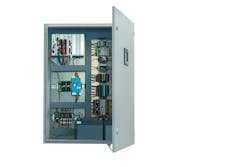
In most factory lines, the soft programmable logic controller (PLC) and programmable automation controller (PAC) are commonly based on industrial PC (IPC) hardware. It is this hardware platform that has quietly become one of the most important components of a factory line’s control hardware.
As more processing power moves to these controllers—for sequencing, motion control, vision systems, data acquisition, manufacturing execution system (MES) integration and advanced human-machine interfaces (HMIs)—the reliability of that IPC matters just as much as its performance. That is one reason the fanless industrial PC and panel PC—an IPC that has an integrated HMI panel—have become so widely adopted across production floors.
For manufacturing engineers and technicians, the appeal of fanless systems is straightforward: no fans means no moving parts to fail, no filters to clog and no airflow pulling dust or contaminants into the enclosure. In environments ranging from cement plants to pharmaceutical packaging lines, eliminating forced air cooling significantly increases uptime. Instead of relying on internal airflow, fanless PCs dissipate heat through the enclosure itself. And that is where housing material becomes a critical design decision.
The most common options for panel PCs are aluminum die-cast and stainless steel. Both can achieve high ingress protection ratings such as IP67 or IP69K. Both can be fully sealed against dust and water. The difference is not about whether dust gets in; it is about how the enclosure behaves over years of operation.
Aluminum die-cast housings are widely used in general industrial environments, particularly where dust is present but aggressive washdown is not. The primary advantage is thermal performance. Aluminum conducts heat extremely well, 10 to 15 times more than stainless steel, in fact, making it ideal for fanless designs where the enclosure doubles as a heat sink. Better thermal conductivity allows higher processor performance without exceeding temperature limits. For applications such as machine control, inline inspection or data collection in dry manufacturing plants, this can provide a meaningful performance margin.
Interestingly, typical protective coatings for aluminum, such as paint or powder coating, do not impact the heat dissipation properties of aluminum to any great degree for conduction and convection. Anodizing actually improves the radiative efficiency of anodized aluminum, which actually increases by an order of magnitude over bare aluminum, depending on the color.
Weight is another consideration. Aluminum is significantly lighter than stainless steel, typically around one-third the weight. When panel PCs are mounted on swing arms, robotic cells or machine frames subject to vibration, reduced weight lowers mechanical stress on mounting hardware. Installation is easier, and long-term fatigue on brackets and supports is minimized.
Of course, cost also plays a role. In dusty but otherwise controlled environments, such as woodworking, cement or dry food packaging, aluminum provides sufficient durability at a lower price point. If the environment does not require aggressive sanitation or exposure to corrosive agents, stainless steel may simply add cost without adding practical benefit.
Get your subscription to Control Design’s daily newsletter.
Stainless steel, however, becomes the clear choice when corrosion resistance and sanitation dominate the requirements. In food and beverage production, dairy processing, meat and poultry plants and pharmaceutical manufacturing, equipment must endure frequent washdowns with caustic cleaners, hot water or even high-pressure spray. Stainless steel resists corrosion far better than even coated aluminum and does not rely on a painted or powder-coated surface that could chip over time.
Surface integrity matters in hygienic environments. Stainless steel housings, especially in 304 or 316 grades, offer smooth, non-porous surfaces that tolerate repeated chemical exposure without degrading. For facilities operating under strict good manufacturing practices or food safety protocols, that long-term resilience can prevent costly replacements and reduce contamination risk.
There is also the question of environmental combination effects. Dust alone does not necessarily require stainless steel. But dust combined with moisture, salt air, fertilizer particles or chemical exposure changes the equation. In coastal facilities or wastewater plants, for example, corrosion can accelerate quickly. In those cases, stainless provides insurance against long-term enclosure failure.
The decision, then, is less about which material is “better” and more about matching the housing to the risk profile of the environment. If the plant is dry, dusty and performance-driven, aluminum often delivers the best balance of thermal efficiency, weight and cost. If the environment involves washdown, corrosive agents or strict sanitation standards, stainless steel offers durability that justifies its higher upfront investment.
For manufacturing engineers and technicians specifying fanless PCs and panel PCs, it helps to think in layers: first ensure the correct IP rating for ingress protection, then evaluate the cooling demands of the workload and finally assess the chemical and cleaning exposure the system will face over its service life.
When selected thoughtfully, a fanless PC becomes a long-term asset rather than a maintenance concern. And choosing the right enclosure material is one of the most important decisions in making that outcome a reality.
Editor’s note: Listen to the audio podcast version of this article.
About the Author
 Joey Stubbs
Joey Stubbs
contributing editor
Joey Stubbs is a former Navy nuclear technician, holds a BSEE from the University of South Carolina, was a development engineer in the fiber optics industry and is the former head of the EtherCAT Technology group in North America.