Legacy PLC maintenance prevents memory loss due to battery failure
Key Highlights
- Older PLCs rely on volatile RAM that can be wiped during a power cycle if the internal battery is dead, making regular battery replacements and health monitoring essential for preventing catastrophic downtime.
- Maintaining up-to-date program backups in secure, centralized locations is a critical common-sense practice that ensures a system can be restored quickly even if hardware or batteries fail.
- While preventive maintenance and UPS installations help, the most effective way to mitigate risk is to migrate to modern PLCs that utilize non-volatile flash memory or EEPROM for permanent data retention.
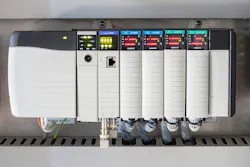
A customer of ours contacted us, explaining their entire wastewater facility was inoperable for almost 15 hours. They had assumed that a recent network change made by the IT department was the cause of the outage.
Once a technician arrived at the site, it was quickly identified that the PLC battery was dead. In conjunction with a power cycle by one of the plant technicians, this resulted in the program being erased from its memory.
It’s a story all too common in industrial controls and automation. We have all gotten that call—the dreaded erasure of a program or lost parameters. In those moments, we wish someone, anyone, had taken the responsibility to document, mitigate risk or even do a simple program backup. In this case, a dead battery that costs next to nothing shut down the plant for two whole shifts before it was clear what had happened.
Why does this happen?
Older programmable logic controllers (PLCs) used batteries to maintain volatile random access memory (RAM). This allows for the PLC to be power-cycled while retaining the program, tag values and retentive data. Batteries were used before flash memory or electrically erasable programmable read-only memory (EEPROM) were widely adopted as the standard.
Modern PLCs and electronics for that matter do not utilize a battery backup for memory retention. But, for the untold number of aging PLCs still in production globally that do need batteries to retain memory, it’s imperative to maintain those batteries and have a process in place to prevent an outage like in our wastewater example.
This method of retaining memory goes way back. As an example, with older CNC, robots and mold injection machinery, it is common that essential parameters are held in volatile memory. If those machines stay powered down for an extended period of time and the batteries discharge and drop below recommended voltage, you power on the machine to find it’s become a paperweight. If you find yourself working with older equipment, it’s very important to make sure that battery is maintained and that all programs/parameters are on file.
Thankfully with modern technology and the standardization of flash memory and EEPROM, this is largely a thing of the past.
Maintenance and replacement practices
If you are maintaining an older PLC, it’s important you regularly maintain that hardware for maximum uptime. It’s a good idea to have spare batteries on the shelf for quick and easy replacement. In some cases this can be done in a hot swap, while the PLC is running a program and powered up.
A regular preventive-maintenance (PM) trigger on interval to check the battery status is a good measure to prevent an accidental loss of program when a plant technician unknowingly power-cycles the equipment.
Some PLCs have the ability to read the health of the battery via an internal tag. That tag could be used to drive an indicator to alert maintenance or staff. This could be taken a step further and used as a trigger for an email, short message service (SMS) text or SCADA message to alert staff of the issue.
Design a system to reduce risk
Maintenance practices are great. But no system is 100% risk-free, and there is always going to be some level of failure. Whether it is due to component level failure, environmental effects or misuse, you can expect a system will fail. It is better to plan for the worst and be prepared.
Get your subscription to Control Design’s daily newsletter.
The best way to mitigate risk on your system is to remove the risk altogether. The most obvious way to do this would be to replace and upgrade the PLC to a modern system that doesn’t rely on a battery. Obviously, this can be disruptive and would require proper planning and migration.
A common addition, even to modern systems, is an uninterruptible power supply (UPS)—a large battery that provides instant backup power in the event of an outage or surge. This is helpful for a multitude of reasons. When upgrading firmware on some PLCs, it’s imperative that power not be lost during this process. It’s equally important that critical operations continue during an outage. It may take time for a backup generator to come online. A battery backup can supply the power needed to prevent the PLC from powering down and flickering during less-than-smooth power delivery.
Regular program backups
Something that seems like common sense but always falls through the cracks is performing regular program backups and, most importantly, storing those backups in a secure location, such as a server. A backup from several years ago on a random laptop could be outdated and leave your system lacking functionality if any additions had been made in recent times.
There are some very innovative technologies, such as Rockwell Automation FactoryTalk AssetCentre or Copia, that help to automate this.
Closing
If you are dealing with aging or even new automation equipment or controls components, risk mitigation should be top of mind. We take for granted the reliability of these systems until they fail, and we are left picking up the pieces. Take a good hard look at any system, and you likely can find weak links where small changes can have a big impact.
About the Author
 Preston Hadley
Preston Hadley
Envision Automation & Controls
Preston Hadley is president and founder of Envision Automation & Controls in Evansville, Indiana. Contact him at [email protected].
 Leaders Logo
Leaders relevant to this article: