$16 million awarded for breakthrough metal-recovery innovations
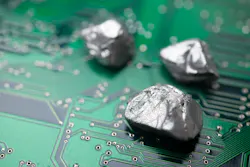
The U.S. National Science Foundation Directorate for Technology, Innovation and Partnerships (NSF TIP) announced eight winners of the Tech Metal Transformation Challenge launched by Stride Ventures in November 2025.
Winning teams will receive up to $2 million in the first 10-month stage to conduct research and development on their solutions for end-to-end prototype systems that can extract, convert and return metals from complex domestic waste streams into high-performance materials for advanced manufacturing.
“The Tech Metal Transformation Challenge is an exciting program that addresses a national security imperative to secure the domestic supply chain for critical minerals through research and innovation,” said Erwin Gianchandani, NSF assistant director for TIP. “The winners of this challenge demonstrated their capability to create solutions that tackle the hardest technical gaps in critical materials recovery, gaps that directly impact U.S. manufacturing competitiveness and national security. Their work will reduce reliance on foreign sources and enable onshoring of advanced manufacturing capabilities across key sectors like defense and energy.”
The Tech Metal Transformation Challenge winners were selected from a pool of 18 finalists who pitched their ideas in person to a jury of industry, government and academic subject matter experts. Up to six of these teams will advance to Stage 2 (12 months) with up to $2.5 million each for market validation, and up to four finalists will earn up to $3 million in Stage 3 (12 months) to scale their technologies into the market.
Between November 2025 and January 2026, 130 teams submitted applications, which were reviewed by external experts and Stride Ventures and NSF staff. The reviewers evaluated applications based on adherence to challenge goals, boldness of vision, technical novelty and stage of development. Finalists were invited to pitch their solutions in person in Washington, D.C., in February. Winners were selected the following day.
TIP is experimenting with bold, responsible methods to rapidly fund U.S. innovation. The Stride Ventures initiative is one example of this “metascience” approach, accelerating the time from proposal deadline to decision. Following a rigorous and ambitious review process, Stride, with guidance from NSF, made funding decisions seven weeks after the written proposal deadline, with the winning teams having access to the first $1 million just one week later.
Stride is designed to enable NSF to experiment with new models of innovation funding, connecting researchers and entrepreneurs to urgent national challenges and accelerating the path from discovery to deployment. Stride’s mission is to empower teams to move fast, take risks and deliver impact. Stride Ventures is an initiative operated by the Start2 Group to rapidly advance innovations that reinforce U.S. technological leadership, economic security and industrial resilience.
The multi-year, three-stage program was co-designed with and is running parallel to Germany’s SPRIND Tech Metal Challenge. SPRIND is the Federal Agency for Disruptive Innovation, led by Rafael Laguna de la Vera. Supported by tiered funding and expert guidance, these programs could advance breakthrough innovations from research and development to market validation, scale-up and deployment.
IBM and Aurubis provided donated e-waste that will serve as reference material during the initial stage of the challenge, enabling teams to test and validate their approaches using real world feedstocks. This work will be conducted in collaboration with the U.S. Naval Research Laboratory, whose engagement will bolster the technical rigor and national security relevance of the effort. The reference material is intended as a shared verification baseline, while teams are encouraged to focus their designs on the real-world waste streams and product pathways that best align with their technology and show the highest potential for supply-chain adoption.
TIP will assess the impact of the accelerated timeline for funding the Tech Metal Transformation Challenge to gain insights on how to improve and expand the ways NSF supports and funds innovation. Notably, 60% of the finalists were from small businesses, representing a shift toward reaching organizations new to NSF funding with relevant opportunities.
The Tech Metal Transformation Challenge is the first funding opportunity of Stride Ventures. NSF TIP anticipates announcing a new challenge through Stride later this year.
The Tech Metal Transformation Challenge winners are listed below.
- alkaLi Labs: Engineered biosorbents recover lithium, cobalt and rare earths from industrial byproducts, producing concentrated, manufacturing ready inputs. Their goal is to create low-cost, deployable systems that strengthen domestic battery and magnet supply chains.
- ChemFinity Technologies: Next-generation tunable polymer sorbents capture more than 25 critical and precious metals at room temperature, generating refinery-grade fractions for U.S. manufacturers. Their goal is to replace energy-intensive recovery with a modular, low-impact system that supports circular, domestic supply chains.
- Critical Materials Recycling: Acid-free dissolution recycling converts shredded electronics into high purity copper, rare earths and other metals through an ambient condition, closed-loop system. Their goal is to build a scalable circular platform that enhances U.S. access to critical materials while reducing waste and processing costs.
- EDAC Labs: Integrated catalytic, hydrometallurgical and electrochemical processing converts complex e-waste into manufacturing-ready metals and chemical feedstocks with fully regenerative reagent cycles. Their goal is to create a low-waste, high-value domestic refinery model that reliably supplies U.S. manufacturers with critical minerals from waste.
- Infinite Elements: A bio-enabled system recovers metallic copper, gallium, indium oxides and rare earth oxides from mixed e-waste in forms optimized for industrial use. Their goal is to establish a distributed, low-energy waste to manufacturing pipeline that reduces dependence on primary mining.
- Intel-E-Waste: A feed-agnostic, modular platform tailors disassembly and processing to each waste stream, producing clean, manufacturing-grade fractions of metals and silicon. Their goal is to enable a distributed domestic recycling infrastructure that minimizes contamination and directly supports U.S. industrial workflows.
- University of Wisconsin-Madison: Electrochemical ion storage electrodes selectively capture and release critical metals while generating acids and bases in situ to lower chemical inputs. Their goal is to build a customizable extraction platform that supplies high-purity materials to U.S. manufacturers with lower energy and environmental costs.
- Valor Metals: An electrochemical liquid–liquid extraction system produces direct-to-component outputs such as copper foil, rare earth oxides, battery-grade lithium and semiconductor-grade gallium oxide. Their goal is to streamline domestic refining so manufacturers can source critical metals directly from recycled and unconventional feedstocks.