EOSYS' Chase Davis explains optimized motion system footprints
Key Highlights
- Decentralized drives streamline industrial systems by moving motor controls out of the enclosure and onto the machine, significantly reducing wiring complexity, cable lengths and the overall footprint of control panels.
- Utilizing on-machine drives with pre-fabricated cordsets and daisy-chained networking allows for faster installation, easier modular expansion and rapid component replacement to minimize downtime.
- Frequency inverters have evolved beyond simple speed control to include sophisticated vector modes, predictive maintenance diagnostics and regenerative power capabilities that enhance both precision and energy sustainability.
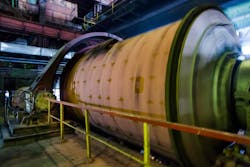
Chase Davis has worked with EOSYS, a certified member of the Control System Integrators Association, for more than 20 years. Now director of technology at EOSYS, Davis answered a few questions about decentralized drives, frequency inverters, communication protocols and energy efficiency (Figure 1).
Can you explain what a decentralized drive is and how decentralized drives differ from centralized drive systems, in terms of installation, wiring complexity and maintenance?

Chase Davis, director of technology, EOSYS, a certified member of the Control System Integrators Association (CSIA): A decentralized drive refers to a drive installed on a machine, rather than housed within a control enclosure alongside other drives and motor controls. By positioning the drive close to the motor, it eliminates the need for lengthy motor cables and auxiliary equipment such as line reactors. Power distribution and networking are commonly achieved through trunk-style or daisy-chained cabling, reducing the amount of wire and cabling in the system.
Furthermore, distributed drive systems can provide additional I/O capabilities for field devices, effectively reducing the necessity for extra I/O modules and enclosures. These systems often feature cordset connections, enabling rapid replacements and minimizing downtime. Collectively, these advantages translate into simpler installations, reduced wiring complexity and easier ongoing maintenance for industrial applications.
What are some applications where decentralized drives might benefit an industrial system being designed and built?
Chase Davis, director of technology, EOSYS, a certified member of the Control System Integrators Association (CSIA): Industrial systems with large footprints or restricted space for control enclosures can greatly benefit from decentralized drive systems. For instance, conveying systems are particularly well-suited for this approach, as decentralized drives streamline power and network distribution. Modular systems are also a good fit, since the flexibility of power and network trunks allows for easy expansion by simply adding new drives as needed.
Moreover, decentralized drive systems simplify control panel design. With power and networking as the primary components housed in the enclosure, the overall size and footprint of these panels are significantly reduced. Another notable advantage is the decrease in installation time, as pre-fabricated cables can be utilized to expedite installation and reduce wiring errors.
Get your subscription to Control Design’s daily newsletter.
Collectively, these qualities enhance both the efficiency and scalability of industrial automation projects.
How have frequency inverters evolved over recent generations in terms of control features, communication protocols and energy efficiency?
Chase Davis, director of technology, EOSYS, a certified member of the Control System Integrators Association (CSIA): Contemporary drive technologies have advanced significantly, now featuring sophisticated control modes that surpass traditional V/Hz methods. Options such as vector control deliver enhanced accuracy and efficiency, often incorporating encoder feedback for superior performance. In parallel, modern network interfaces have revolutionized drive integration by replacing hardwired control signals. This shift not only streamlines installation and setup but also enables richer diagnostic capabilities and makes both configuration and replacement processes faster and more reliable.
Manufacturers are also embedding predictive maintenance features into their drives, allowing the early detection of irregularities in both machines and motors. This proactive approach helps prevent unplanned downtime and extends equipment life. Additionally, many drive systems are now equipped with regenerative front-end power capabilities, which allow them to recover and reuse energy, further boosting overall efficiency and sustainability within industrial environments.
About the Author
 Mike Bacidore
Mike Bacidore
Editor in Chief
Mike Bacidore is chief editor of Control Design and has been an integral part of the Endeavor Business Media editorial team since 2007. Previously, he was editorial director at Hughes Communications and a portfolio manager of the human resources and labor law areas at Wolters Kluwer. Bacidore holds a BA from the University of Illinois and an MBA from Lake Forest Graduate School of Management. He is an award-winning columnist, earning multiple regional and national awards from the American Society of Business Publication Editors. He may be reached at [email protected]
 Leaders Logo
Leaders relevant to this article: