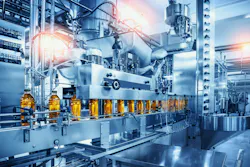
From decentralized architectures to digital twins
Key Highlights
- Moving drives out of centralized control cabinets and mounting them directly at the machine node level significantly simplifies wiring topology, accelerates field deployment and isolates faults for easier maintenance.
- Advanced control methods like field-oriented vector control and integrated encoder feedback allow modern variable frequency inverters to achieve low-speed torque and precision that historically required expensive, complex servo systems.
- By continuously feeding real-time electrical, mechanical and environmental data back into a synchronized virtual model, engineers can reliably catch bottleneck failures and validate control strategies virtually before a single piece of hardware is powered on.
Connor Doherty is director of industrial automation, and Eric J. Halvorson is senior marketing technology manager—automation & control at DigiKey.
Can you explain what a decentralized drive is and how decentralized drives differ from centralized drive systems, in terms of installation, wiring complexity and maintenance?

Eric J. Halvorson, senior marketing technology manager—automation & control, DigiKey: A decentralized drive is one that’s placed closer to or directly on the motor itself, rather than being housed in a centralized control cabinet. That architectural shift has meaningful implications across installation, wiring and maintenance. From an installation standpoint, decentralized drives can significantly speed deployment because they’re modular and mounted at the machine level, reducing the need for large, complex control cabinets. Wiring is also simplified, since much shorter motor cable runs are required, which streamlines both power and network distribution across the system. From a maintenance perspective, decentralized systems make troubleshooting more straightforward; rather than accessing a central cabinet, issues can be isolated and addressed at the individual node level. Taken together, this approach supports faster commissioning, cleaner system design and more efficient ongoing operations.
What are some applications where decentralized drives might benefit an industrial system being designed and built?

Connor Doherty, director of industrial automation, DigiKey: Decentralized drives tend to deliver the most value in applications where scalability, flexibility and localized fault management are critical to system performance. They’re particularly well-suited for systems that need to easily add zones or nodes over time, while maintaining clear visibility and control at the machine level. Common examples include conveyor and intralogistics systems, such as warehouse automation and parcel handling, where distributed motion and fast fault isolation are essential. Modular production lines also benefit, as decentralized architectures support incremental expansion without reworking a central control cabinet. In food and beverage processing, especially in washdown environments, placing drives closer to the motor can improve system robustness and simplify design. Packaging machinery and airport baggage handling systems are additional examples, where high uptime, distributed control and straightforward maintenance are key operational requirements.
Servo motors have traditionally been preferred for high-precision, high-response applications. How might an inverter affect someone's evaluation of switching out servos for induction motors?
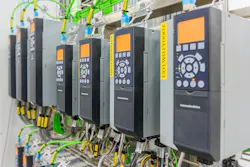
Eric J. Halvorson, senior marketing technology manager—automation & control, DigiKey: Servo motors have long been the default choice for applications requiring high precision and fast dynamic response, but modern inverters are changing how that tradeoff is evaluated. Today’s variable frequency drives offer advanced control methods that significantly narrow the performance gap between servos and induction motors (Figure 1). With improved torque control at low speeds and the ability to integrate encoder feedback, induction motor systems can now deliver performance levels that were previously difficult to achieve without a servo. As a result, many applications that once required a servo solution can now be addressed with an induction motor paired with an inverter, often at a lower overall cost and with simpler system complexity. This is prompting many designers to take a fresh look at where servos are truly necessary versus where modern inverter-driven solutions can meet the need more efficiently.
How have frequency inverters evolved over recent generations in terms of control features, communication protocols and energy efficiency?
Connor Doherty, director of industrial automation, DigiKey: Frequency inverters have evolved substantially over recent generations, moving well beyond basic voltage to frequency control into far more sophisticated control architectures. Today’s drives commonly support vector control and field-oriented control, enabling more precise motor performance, improved dynamic response and better efficiency across a wider range of operating conditions. In parallel, safety capabilities have expanded, with features such as safe torque off and safe speed functions now increasingly standard, helping simplify machine safety design and compliance. On the communications side, there’s been a clear shift toward industrial Ethernet protocols, along with growing support for IIoT connectivity. Together, these advancements have transformed frequency inverters from simple motor-control devices into intelligent, connected components that play a central role in modern, energy-efficient automation systems.
Get your subscription to Control Design’s daily newsletter.
Speaking of advanced simulation, the definition of a digital twin can vary, based primarily on the application. What's your definition, and how are digital twins utilized within the development and commissioning processes, and what impact have digital twins had on reducing project lead times or improving reliability?
Eric J. Halvorson, senior marketing technology manager—automation & control, DigiKey: We view a digital twin as a real-time or near-real-time virtual representation of a physical system that’s continuously informed by operational data. Rather than being a static model, it evolves alongside the asset, reflecting how the system behaves under real-world conditions. Within development and commissioning, digital twins are used to validate designs, test control strategies and evaluate performance across a range of operating scenarios before anything is deployed on the plant floor. This approach helps teams identify bottlenecks, uncover potential failure points and fine tune system behavior much earlier in the process. The impact is meaningful: projects benefit from shorter commissioning cycles, fewer late-stage changes and improved overall reliability, as many issues are resolved virtually before ever appearing in production.
What kinds of data and sensor inputs are most valuable for building accurate digital twins of drive systems, and how important is it to ensure real-time synchronization between physical and virtual models?
Connor Doherty, director of industrial automation, DigiKey: Building an accurate digital twin of a drive system starts with capturing the right foundational data from the drive and motor themselves. Core inputs, such as motor currents and voltages, torque, drive parameters and load profiles are essential for modeling the system’s behavior under normal and edge-case operating conditions. Environmental data, like temperature and vibration, adds another critical layer, helping teams understand how external factors influence performance, wear and reliability over time. At the system level, data such as network status and production throughput provide important context, linking individual drive behavior to overall machine and process performance. Just as important as the data itself is real-time synchronization between the physical asset and its virtual counterpart. Maintaining tight alignment ensures the digital twin remains a trustworthy representation of the live system, enabling more accurate diagnostics, faster root cause analysis and more confident optimization decisions.
Tell us about one of your company’s state-of-the-art product that involves drives, motors, inverters or digital twins
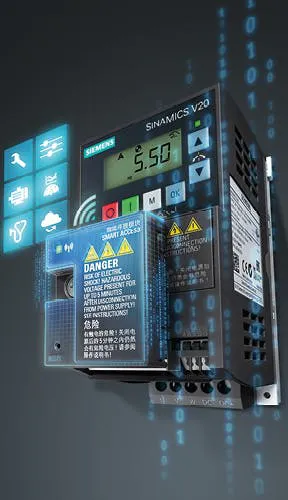
Eric J. Halvorson, senior marketing technology manager—automation & control, DigiKey: One state-of-the-art solution we carry from Siemens is the Sinamics V20 Smart Access Module, which enables wireless commissioning, diagnostics and monitoring of variable-frequency drives through a mobile interface (Figure 2). At a high level, it reflects where the industry is headed—toward simpler commissioning experiences and more accessible digital tools. Removing the need for specialized hardware or software makes advanced drive configuration more approachable, particularly for smaller OEMs and system integrators. More importantly, it underscores a broader shift in how drives are viewed: not just as standalone components, but as connected, software-enabled assets that play a critical role in modern, digitally driven automation strategies.
About the Author

Mike Bacidore
Editor in Chief
Mike Bacidore is chief editor of Control Design and has been an integral part of the Endeavor Business Media editorial team since 2007. Previously, he was editorial director at Hughes Communications and a portfolio manager of the human resources and labor law areas at Wolters Kluwer. Bacidore holds a BA from the University of Illinois and an MBA from Lake Forest Graduate School of Management. He is an award-winning columnist, earning multiple regional and national awards from the American Society of Business Publication Editors. He may be reached at [email protected]