Design packaging systems to extract value during changeovers
Key Highlights
- Rapid SKU proliferation across industries like consumer packaged goods and pharmaceuticals is forcing packaging lines to handle constant variations in sizes, labels and configurations, making efficient changeover a critical operational priority.
- High-speed, high-mix packaging operations are moving toward pre-engineered electromechanical platforms, typically utilizing belt drives and servo motors, to enable automated adjustments, fast axis homing and multi-axis synchronization.
- Packaging OEMs are shifting from a component-by-component design approach to integrated, platform-based motion systems that allow digital recipe downloads and network-driven adjustments, reducing changeover times from hours to minutes while cutting down on scrap and downtime.
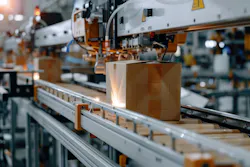
Packaging SKU proliferation continues to accelerate, especially in consumer packaged goods, food and beverage, personal care, pharmaceuticals and e-commerce fulfillment. What was once a single product may now exist in dozens or even hundreds of variants, forcing packaging lines to handle frequent changes in carton sizes, labels, pallet patterns and configurations. Efficient changeover amidst this shift has become one of the packaging industry’s defining operational challenges.
The faster a packaging cell can switch from one SKU to another, the more uptime remains available for production. To manage this variability, packaging OEMs are increasingly designing machines around faster, easier changeover, a capability driven largely by the motion control system. Motion systems govern nearly every adjustment required during a product transition, including repositioning components, retiming operations, resynchronizing stations, adjusting speeds and changing spacing while maintaining throughput and minimizing scrap.
Accelerating changeover is reshaping how OEMs select and apply linear motion technology. Many are moving away from a component-by-component approach toward integrated, platform-based motion systems optimized across multiple machine variants, markets and operating conditions over time.
Assessing variability
Increasingly dynamic markets, fluctuating consumer demand and advancing technology are driving SKU proliferation to new heights. The majority of packaging applications involve high-speed, high-mix operations that require only medium precision. This includes primary packaging operations such as cartoning, wrapping and sealing, as well as package assembly and handling functions such as pick-and-place operations, sorting and bundling.
In food production cartoning, for example, feed rates may vary from 200 to more than 600 cartons per minute, while SKU counts, flavors and promotional bundles change frequently. Product flow can also be inconsistent, switching from lightweight rigid cardboard to flexible items like bags or pouches. This all requires high-speed, coordinated motion with tight synchronization between infeed, grouping, cartoning and sealing , some of which may change multiple times per shift. Uncoordinated operations can cascade into jams.
In such applications, however, the precision of the motion itself is less critical. If a label is a little off kilter, it has little impact on the batch, but a change in throughput from 600 cartons per minute to 590 cartons would require some investigation.
Electrical component options
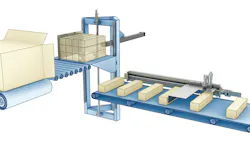
Electric actuators convert rotating energy from a motor to linear motion using a screw or belt, pulley and chain mechanism to move a load along a more controllable linear path (Figure 1). Identifying the ideal solution to facilitate changeover at the component level involves considering the following selection criteria:
- Rodless actuators using a belt drive with prism bushing or profile guides: The high-speed, low-precision nature of the packaging industry already favors belt drives as the more effective choice. Ball and lead screw systems are generally less suitable as the ideal actuator for packaging lines because both are susceptible to vibration and buckling as speeds increase. The wheel guides add support to keep things operating smoothly. The prism guidance would be used to achieve more repeatability.
- Rodless actuator with screw-driven architectures: These actuators use an enclosed, threaded piston instead of a rod that extends beyond the housing. The load attaches to the nut, which moves as the ball screw rotates. This mechanism can handle higher speeds and longer stroke lengths because it tolerates the loss of precision that occurs as speeds increase. This impacts changeover by simplifying the repositioning of tooling rapidly across long travel distances.
- Servo motors: Servo motors do not lose torque at higher speeds, making them highly suitable for supporting faster changeover in high-speed processing. They enable faster axis homing and recovery, and, when integrated with absolute encoders, can correct position automatically. Servo motors facilitate the high-speed synchronization of multiple axes, allowing for software-coordinated stabilization and automatic software-managed coordination. Plus, servo motors are energy efficient, reducing costs while contributing to more sustainable operation.
- Power backbone: Modern packaging apps are being built on a power transmission backbone, involving gearing drives, couplings and bearing components, as well as the motor. The more standardized these components become, the more they will provide a stable platform for the automation of packaging machines. A solid, standardized backbone improves changeover by supporting functions such as alignment, vibration reduction and backlash prevention.
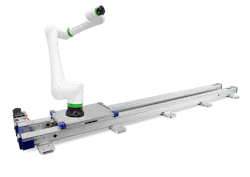
- Seventh axis: Extending a robot’s reach via a linear guide along which the robot framework slides to tend to multiple workstations, a seventh axis significantly increases throughput and flexibility (Figure 2). In the packaging industry, these transfer units can be found wherever robots are used, including cartoning arms, palletizers and de-palletizers, pick-and-place functions, robotic packing cells and automated storage. In addition to the belt drive, the system might integrate linear guides, servo motors and precision gearheads. They help with changeover by supporting modular, reconfigurable packaging lines where capacity can be scaled without duplicating full cells.
Integration
While selecting drives, rodless architectures, servo motors and power train elements can help speed changeover, the most dramatic changeover optimization comes when these components are considered from a systems perspective. Systems integrate guidance, drive, encoder and mounting interfaces into a single package and provide flexible motion platforms commonly used in pick-and-place systems, robotic assembly and automated storage applications.
Get your subscription to Control Design’s daily newsletter.
OEMs can work with their motion vendor to create plug-and-play, integrated systems with reusable modules. These pre-engineered motion systems help remove mechanical and operational barriers to efficient packaging operations. Instead of treating motion as a custom-engineered, fixed asset, they turn it into a configurable, reusable module. This enables faster, more predictable changeovers, as well as reduced tuning time, vibration problems, tolerance stackup and commissioning delays.
Pre-engineered modules have tighter component integration, which eliminates the need for rework during changeover. These components provide standardization that facilitates data collection, which can be useful for streamlining future changeover options. Packaging-specific components, such as T-nuts shaped specifically to fit extrusions of the system or universal brackets that can stack more easily, can be factored into the module design.
Integrated systems built around standardized motion platforms further enforce consistent designs and component and system reusability. This approach enables plug-and-play tooling stations, faster deployment of new machine variants, easier scaling and consistent changeover procedures across platforms. Reconfiguration would be significantly easier or perhaps not even necessary.
Digital recipe access: Servo control enables recipe-driven position changes, automatic stroke adjustment, stored motion profiles and electronic synchronization. Users can access motion profiles for various SKUs instantly, which can reduce changeover time from hours to minutes. A control system can download new motion parameters, reposition multiple axes simultaneously, verify completion electronically and coordinate timing across the machine. Instead of mechanically retiming the machine, the operator simply loads the recipe.
Network access: When equipped with support for industrial networks such as CANopen, EtherCAT, Profinet and EtherNet/IP, motion control systems can participate directly in automated changeover routines. So, when switching from one SKU to another, the machine can automatically change timing profiles, adjust motion trajectories, reposition stations, modify acceleration curves and synchronize speeds digitally.
Scrap reduction: Before starting or restarting a machine, scrap from previous operations must be handled. This includes loose packaging material, partially completed packages and misapplied labels. In high-mix applications such as packaging, this step can add significant downtime. Better access to production data and reusable data systems and components can reduce time spent on this task.
Extracting value from faster changeover
As packaging moves toward mass customization, smaller batches, faster product launches and rising SKU counts, changeover performance has become a key competitive differentiator. Actuator selection now affects flexibility, platform reusability, digital integration and the ability to absorb production variability with greater uptime and lower maintenance. As a result, actuator selection is shifting from a late-stage component decision to an early-stage architectural one. This is especially true in the high-speed, high-mix, low-precision operations that characterize much of the packaging industry, where automating changeover delivers the greatest value.
For these environments, the ideal motion system is typically a pre-engineered, electromechanical platform using a belt drive and servo motor. Pre-engineered systems integrate components more tightly, improving performance while enabling modular architectures that reduce changeover time. Belt drives support high speeds and flexibility, while servo motors enable advanced capabilities such as digital recipe download, automated homing, network integration, multi-axis synchronization and closed-loop control.
In practice, changeover is not always the primary optimization goal, but it remains one of the major opportunities to extract value from packaging operations. Accordingly, changeover-friendly design decisions are most effective when considered early in the planning process.
About the Author
 Pablo Olachea
Pablo Olachea
Regal Rexnord
Pablo Olachea is an industrial automation engineer in Regal Rexnord's linear motion division. He has a degree in mechanical engineering from the Tijuana Technology Institute.
 Leaders Logo
Leaders relevant to this article: