Key Highlights
- Shifting from centralized control panels to remote I/O brings hardware closer to field devices, significantly cutting wiring material and labor costs while freeing up valuable space in central control cabinets.
- Remote I/O platforms are designed to be controller-agnostic by supporting standard industrial Ethernet protocols, such as Profinet, EtherNet/IP and Modbus TCP, allowing original equipment manufacturers (OEMs) and integrators to reuse the same hardware across different PLC brands.
- Designers can choose between compact, self-contained standalone modules for fixed I/O needs or highly customizable modular remote I/O systems to easily scale, swap and adapt connection points for future system expansion.
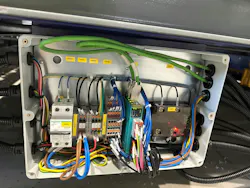
Implementing a reliable input/output (I/O) architecture is fundamental for any type of monitoring and control system. An increasing demand for Internet of Things (IoT) data gathering and sophisticated automation is prompting designers to find more effective I/O for connecting with sensors, motor controls and actuators. Whether onboard a small machine or distributed across a much larger-scale automation application, I/O requires the flexibility and scalability to handle scattered signal locations and be ready for future expansion.
Using a remote I/O platform for connecting with signals that are physically separated from the primary controller, which is often an industrial-grade programmable logic controller (PLC), is not a new concept. Remote I/O is an established way to avoid long wiring runs, minimize material and labor costs and provide design flexibility. However, choosing the right remote I/O platform to address a variety of applications, installation conditions and controller types requires a bit of consideration.
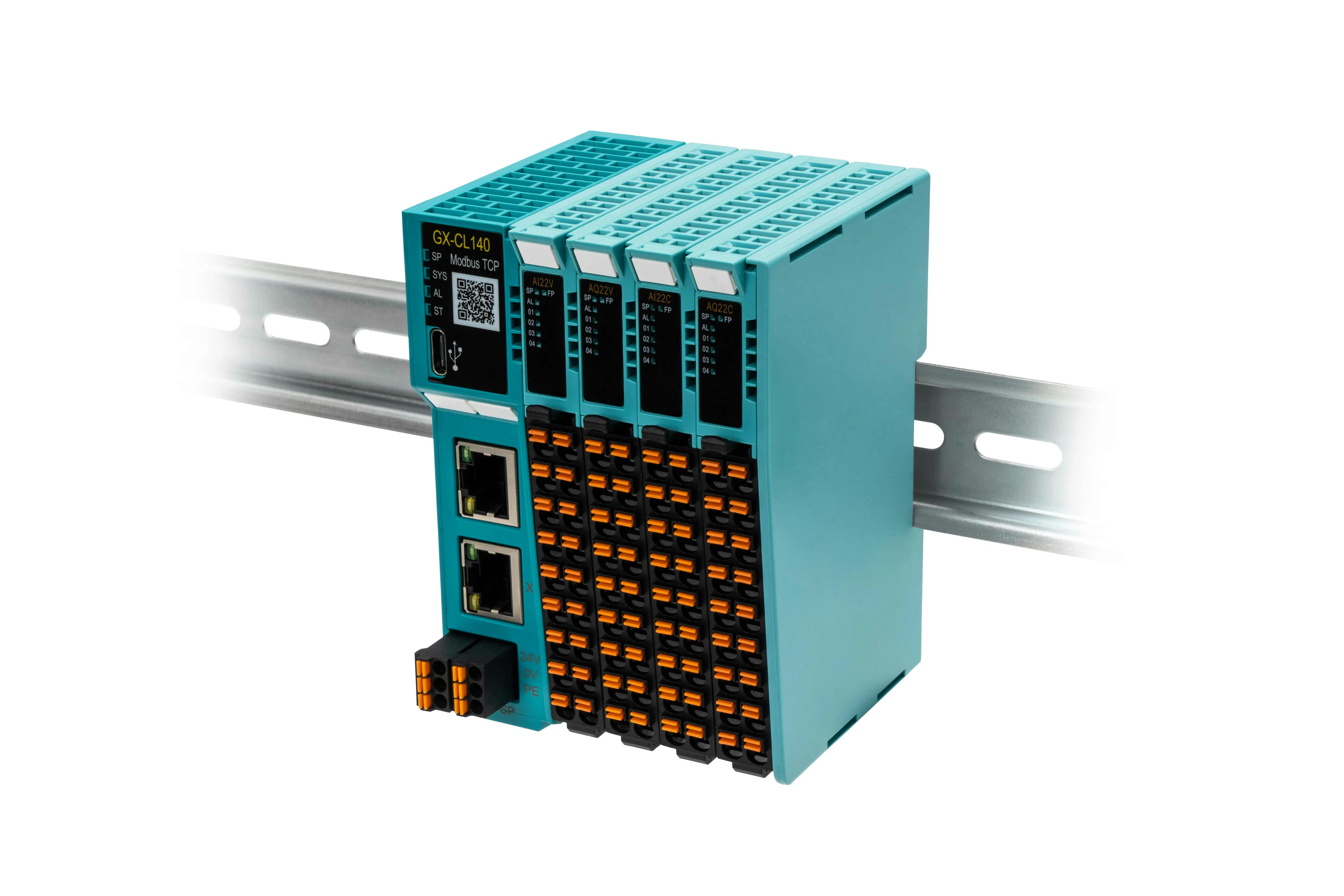
There are two primary hardware architectures when it comes to remote I/O—standalone and modular. Standalone remote I/O is a self-contained device, which supports fixed types and quantities of inputs and outputs. Alternatively, modular remote I/O consists of a coupler/adapter supporting varying quantities of modules (Figure 1). Stacking different cards allows the user to customize the type and quantity of I/O available at that location, ranging from just a few points to many dozens.
Remote I/O shifts the connectivity hardware out of the central panel and into proximity with the field-located monitoring and control access points. Individual machines, conveyors or servers can be monitored and controlled by separate blocks of remote I/O organized to accommodate the architecture and geometry of the system. This significantly reduces the need for long point-to-point wiring, leading to reductions in labor time and material costs.
Making the connection
Many automation vendors offer their own product lines of remote I/O, which will obviously work with their PLCs. However, it is common for automation designers and systems integrators to implement various makes/models of PLCs depending on the application requirements and end-user specifications. Especially for original equipment manufacturers (OEMs) producing largely standardized equipment, choosing a single remote I/O supplier provides an advantage over redesigning to accommodate vendor-specific remote I/O changes.
Remote I/O modules will require a power circuit, a physical network media and a communications protocol. While in years past the network connection may have been a serial link or some other dedicated industrial fieldbus, today the typical network standard is Ethernet. Remote I/O is designed to be platform-agnostic, using standardized interfaces to work with mainstream controllers by supporting a variety of common industrial automation communication protocols, including EtherNet/IP, Modbus TCP, Profinet, EtherCAT and CC-Link IE Field Basic. This gives designers the flexibility to re-use the same remote I/O hardware in combination with different primary controllers.
The network connection can be a star-type architecture, with home runs back to the central controller. However, some couplers/adapters include two network RJ45 ports with an integrated two-port Ethernet switch to support linear daisy-chained interconnection among remote I/O modules, which is a good fit for many types of distributed physical systems.
Both star and linear network connections facilitate easier maintenance, revisions and future expansion. With modular remote I/O, the modules can be added, removed or swapped without modifying the central controller or the overall system architecture. To support future expansion, additional remote I/O units can be added to the system with minimal impact on the existing system.
Moving I/O hardware out of the central control panel and into the field also reduces the pressures on panel space in the central control cabinet. Although standalone remote I/O lacks the more comprehensive flexibility of modular hardware, it is incredibly space-efficient, with a single module handling I/O and inter-device communication.
When modular remote I/O is required due to larger point counts or a greater need for customizability, designers should seek out products with small form factors using DIN rail mounting, to minimize in-field installation volume and labor (Figure 2).
Get your subscription to Control Design’s daily newsletter.
Remote I/O modules are available in configurations supporting typical discrete and analog I/O signal types, in various point counts, so designers can select just what they need to accommodate the application. Modular remote I/O cards are typically available for a wider range of applications, including discrete and analog I/O, thermocouple and resistor temperature detector (RTD) and pulse output, making modular remote I/O highly configurable and extensible.
The process for selecting a remote I/O supplier should take into account the availability of these different protocol and signal types. However, there are other nice-to-have hardware features that support design, installation and maintenance. Push-in terminals provide a quick, easy and reliable connection method designed to resist loosening from vibration. A standard USB-C port facilitates local firmware updates; these are rarely needed but USB connectivity ensures the procedure can be performed.
Remote I/O applications
A few examples demonstrate how remote I/O delivers value and overcomes common pain points.
Logistics: When a large airport logistics sorting center expanded its operations to add eight new control zones, it introduced hundreds of additional I/O points linked to conveyors, sensors and actuators. These points would be added to an existing main PLC, using site-standard Profinet. With tight space constraints and minimal downtime allowed, the design team planned out 220 standalone remote I/O modules, which could be installed as each area became available during construction, reducing long wire runs and providing a compact solution within a short timeframe. Over the long term, the remote I/O installation provides flexibility to modify or expand individual control zones with minimal impact to the central control system.
Data center: In data center liquid cooling systems, continuous monitoring and control of water temperature, pressure and motor operations are paramount to ensure reliable thermal management. A cooling system manufacturer needed to connect with I/O points located throughout the facility, to provide this mission-critical functionality. Using modular remote I/O supports the current cooling system architecture and provides scalability as the data center equipment changes and expands in the future.
Manufacturing: An AI server manufacturer uses conveyors to move high-value components and assemblies through different production process stages. In this case, it added a variety of analog sensors to the conveyor system, monitoring performance and equipment conditions so it could optimize throughput and identify abnormal conditions. Modular remote I/O reduced costs associated with long wire runs, while ensuring future production line modifications can be addressed in a flexible manner.
Remote I/O—improving flexibility and reducing costs
For system designers and integrators, remote I/O reduces wiring and material costs, improves system scalability and saves control panel space. By distributing I/O hardware in the field, long cable runs between the system and central controller are reduced, minimizing both material and labor costs. Future expansion of I/O points or changes to entire control zones can be facilitated with minimal modifications to the central controller.
Reliable connectivity between PLCs, field sensors, actuators and other devices is essential for monitoring, control and IoT data collection. When designing a new system or expanding an existing one, especially where I/O points are distributed and grouped away from the central controller by any distance, designers can rely on a standardized remote I/O as the most effective way to provide the necessary flexibility and scalability.
About the Author
 Matt Hou
Matt Hou
Dinkle International
Matt Hou is a sales engineer for Dinkle International and has been an integral part of the development of the Dinkle USA subsidiary since 2018. Hou holds a BAS degree in electrical engineering from the University of Waterloo in Canada. Contact him at [email protected].
 Leaders Logo
Leaders relevant to this article: