Take a systems approach to industrial enclosure selection
Key Highlights
- A high NEMA rating, such as NEMA 12 or 4X, can be rendered useless by poor facility layout, such as placing a cabinet directly beneath a chemical station or failing to seal top-entry conduits against gravity-fed leaks.
- Designing a rugged cabinet is futile if the peripheral components, such as trays, conduits and cable interfaces, are not equally hardened.
- Environmental audits must look beyond simple dust and moisture to factors like UV exposure and chemical acidity, necessitating specific material choices like polycarbonate over steel or stainless steel for corrosive washdown areas.
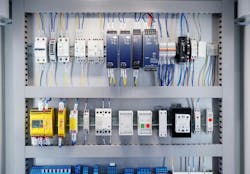
Can we really do away with industrial enclosures? Probably not. Enclosures protect wiring and, on occasion, provide a home for the human-machine interface (HMI) panel.
Protection is a double-edged sword. The enclosure protects components from dust, moisture, chemicals and extreme temperatures, which keeps the environment out. On the other edge, the enclosure keeps the electricity in so that there is not accidental contact, arc flash or damage or injury due to shock.
Safety is a huge factor for industrial enclosures. The National Electrical Manufacturers Association (NEMA) sets standards based on enclosures’ needs to protect and to shield. There are 20 different NEMA 250 type ratings for different environments and requirements.
NEMA 1 is basic protection for indoors and is used in offices and dry areas. NEMA 3R protects from rain, sleet and ice formation. These can be found as telecommunications and utility boxes hosting phone and 120 Vac type circuits. NEMA 4 boxes are found at food facilities or in washrooms or in areas that have high dust, such as wood mills or grain facilities. They also protect against the hose that inadvertently gets pointed at them. NEMA 4X adds a little more protection and provides protection from fluids plus corrosives. NEMA 4X will be found on the coastlines and in harsh environments with chemical exposure. NEMA 12 takes things a bit further and protects against drips and dust in industrial manufacturing plants. The international standard that is similar to NEMA 250 type ratings is IEC 60529 for ingress protection (IP).
Is the NEMA rating a catch-all? No. Design considerations should be applied, and some fluids will penetrate a NEMA 12, regardless of seals, not to mention that the seals change over time.
NEMA ratings also apply to components such as industrial air conditioning, cooling units that go in the electrical cabinets, fan filter units, control panels, disconnect switches, junction boxes and lighting fixtures. Programmable logic controllers (PLCs) and components can also be rated for harsh environments and use different housing and materials to meet such ratings. Why is this important?
Picture wearing a raincoat in a storm but also wearing flip-flops. Designers cannot design in a silo. Just putting a protective cabinet around components may not help the situation.
Another problem that occurs is that knockouts and seals are not done to encompass keeping fluids out. For instance, if you have a motor control center (MCC) or a process control room on the second floor, and you add a chemical station on the third floor, and you think it’s wise to put the chemicals above the MCC or control room, but you do nothing to correct water and chemicals being pulled into cabinets vertically due to gravity, then the NEMA 12 cabinet may be compromised, especially if you do not seal the conduit feeds and the cabinets are fed from the top.
This is the type of problem that happens when engineers do not consider layouts in cement plants or paper mills.
Consider where to enter the cabinet based on the process environment. If the top must be used, consider polymer or silicone sealants that can deter seepage of fluids into a cabinet. Also, consider that the MCC or control room can be hardened to alleviate drips seeping into the electronics.
Get your subscription to Control Design’s daily newsletter.
This presents the next problem, which is the types of tray and conduit used. Open trays should not be used in compromised environments. There are sealed conduit systems, and there are stainless steel conduit systems that are usable in harsh environments. What can you do?
Tubing, jacketing, shielding, fillers and using rope lays can increase the ruggedness of conductor interface to a ruggedized cabinet.
The point to all of this is that choosing a cabinet is only one of the design considerations when faced with environmentally challenged systems. If you do not consider the environment as a whole and take a systems approach, then the control system is at risk of degradation.
How is this convenient for control designers and original equipment manufacturers (OEMs)? It’s not. It’s expensive.
Costs increase dramatically in harsh environment builds.
Even sunlight may destroy an HMI over time. There was one case where a water facility in Florida had a NEMA 4 cabinet outside, facing west. It was sealed properly. The HMI was NEMA-rated. The glass in the screen was not UV-rated or had a low rating due to where the technology was at the time. The screen became unreadable because it spent four hours daily in direct sunlight.
Every two years the HMI was replaced until someone built a cover over the box. Sometimes, your cabinet needs a layered roof or an umbrella. How did the engineer figure it out? They stood and watched and listened and took note of the environment, and it happened to be 4 PM in the summertime in southern Florida. No wonder alligators have three eyelids.
What else might affect the cabinet in certain environments? Material. Did you know that sometimes a polycarbonate is a better enclosure choice than steel or aluminum? Stainless steel is a good idea for food and chemicals.
In conclusion, when choosing an industrial enclosure, not only should the environment and applications be considered first, but design engineers should look at the NEMA rating required, temperature range of the enclosure to determine whether cooling is needed, the type of material that the box should be made from, what type of seal is used, locking mechanisms, impact resistance, size and space. Why use a super tall cabinet and put an HMI at 70 inches if the average person is 68 inches tall?
How do you account for all these characteristics when doing cabinet design and choosing a cabinet? Create a checklist, and go through it with your customer after you walk down the environment. Double-check your design with a review of functional safety and usability. Ask questions and use your head. Sometimes the answer is right in front of you, as in the case of the Florida sun.
About the Author
 Tobey Strauch
Tobey Strauch
Arconic Davenport
Tobey Strauch is currently managing brownfield installations for controls upgrades at Arconic Davenport. She has previously worked as principal controls engineer and before getting her bachelor’s in electrical engineering, was a telecommunications network technician. She has 20 plus years in automation and controls. She has commissioned systems, programmed PLCs and robots, and SCADAs, as well as managed maintenance crews. She has a broad mix of mechatronics with process control. She enjoys solving problems with Matlab and Simscape. Contact her at [email protected].