Architecting control system determinism that lasts
Key Highlights
- Determinism and platform longevity are not isolated specifications, but rather the same core system attribute—confidence—observed across both real-time operational execution and long-term lifecycle timescales.
- Controllers built on a cohesive, ground-up operating system, where networking, security and scheduling are designed together, maintain deterministic behavior even when adapting to decades of new edge computing and IIoT demands.
- A platform's long-term value is measured by its extensible architecture to absorb evolving protocols, security requirements and expanded responsibilities without compromising its original real-time control capabilities.
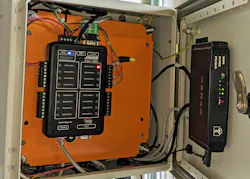
Anyone specifying automation or edge controllers must consider two questions entailing timescales. The first is about a behavior, determinism: can this platform be trusted to do exactly what it is asked to do every time and under load? The second is about lifecycle, specifically longevity: will this platform still be relevant, supported and worth building on a decade from now?
It is tempting to think of these as separate questions because the first is validated on a test bench, while the second is assumed from a datasheet or a vendor's reputation. However, a controller that behaves predictably today but drops out of support within years becomes questionable in service, and a platform that survives for twenty years without ever fully earning the user’s confidence has simply been tolerated. Determinism and longevity are not two distinct properties of a good automation platform, but rather closely coupled concepts observed at two different time scales.
What determinism actually measures
Determinism is a statement about system responsiveness. Critical industrial-type and user-facing applications demand rigorous determinism: microseconds for servo motor control, milliseconds for programmable logic controller (PLC) automation and seconds for an operator interface or supervisory control and data acquisition (SCADA) system. Very slow-moving processes, such as level monitoring of large storage tanks, may perform adequately on timescales of minutes or hours. More casual applications, such as automation of a cinema’s curtains, lights, and audio, will be measured more by whether they operate reliably and on cue without anyone thinking twice about it. Rarely would sluggish performance be preferred, but non-essential or cost-sensitive applications might allow for a lesser degree of determinism.
The word determinism spans domains because it is a proxy for something more fundamental: confidence. Not confidence in a specific clock speed or scan time, although those specifications are useful, but confidence that a system's overall behavior has been anticipated, bounded and verified for the application’s requirements. Such confidence is a byproduct of an architecture where every subsystem's performance and interactions were fully understood at design time, rather than discovered afterward in the field.
As one example, modern edge controllers exist in a space at the intersection of several very different worlds. They communicate:
- downward to sensors, relays, motors and instruments
- sideways to neighboring controllers and equipment on the plant floor
- upward to supervisory systems, databases, cloud services and enterprise software.
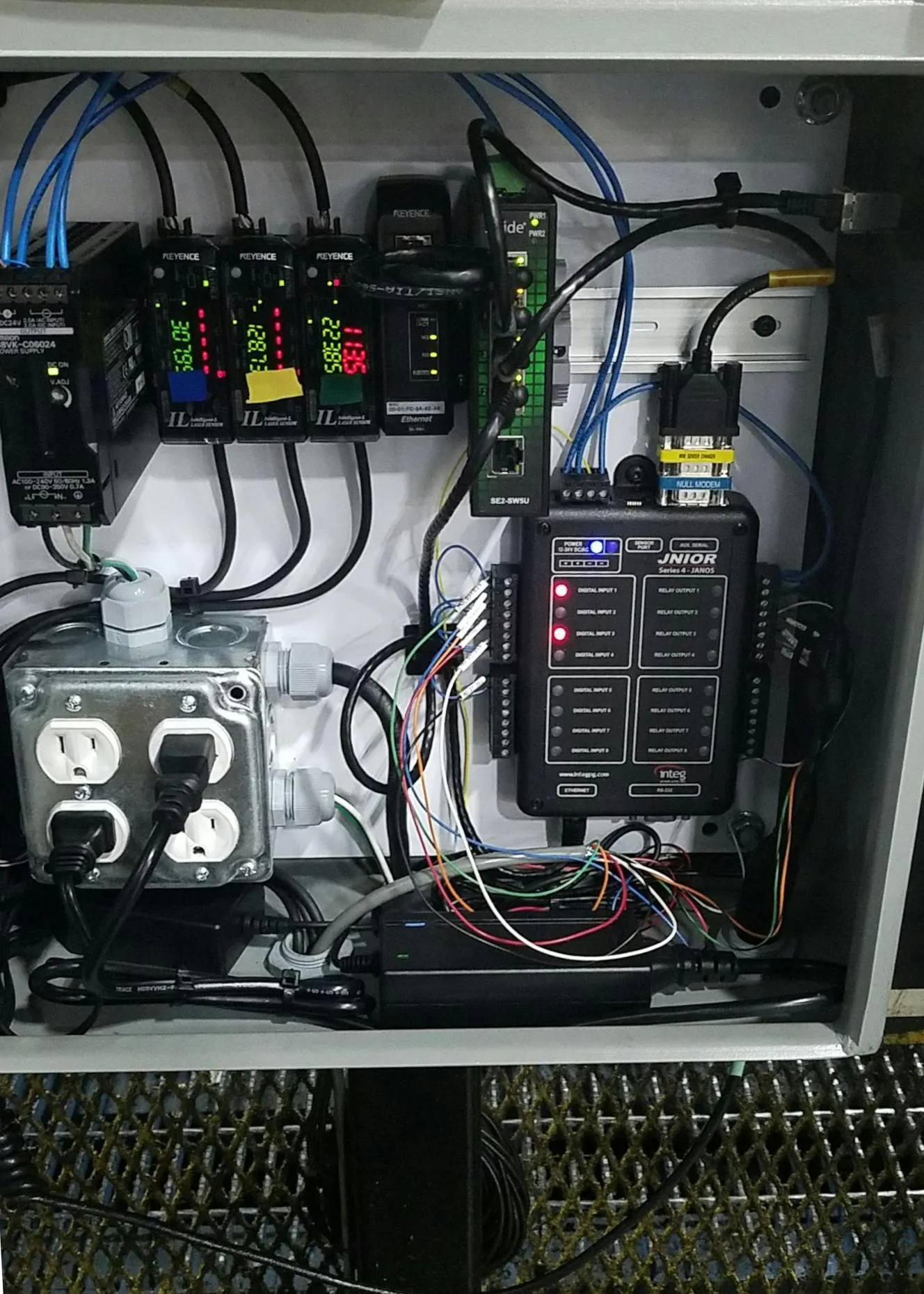
Engineering a deterministic controller is a significant achievement. Preserving that determinism through decades of changing requirements is what ultimately gives users lasting confidence.
Why longevity matters for industry
Most commercial electronics and single-purpose products are designed to be consumed, shipping at peak relevance but moving unavoidably toward replacement as a newer generation arrives. That model works well in high-volume, fast-moving markets.
Automation and edge control platforms work in a different domain because the equipment they are associated with routinely outlives its own designers' expectations. A controller purchased to perform specific activities is often still doing so a decade later and likely has picked up new, previously unanticipated, burdens, such as transmitting industrial internet of things (IIoT) data. In particular, the general-purpose computing capabilities of edge controllers mean they are especially susceptible to being tasked with additional jobs, so longevity is a key requirement. This attribute is only possible if the underlying architecture itself was designed to grow, providing an extensible solution that endures. The true measure of such an architecture is not the number of features it has when it ships, but rather how it continues to handle changing requirements over its lifetime.
Get your subscription to Control Design’s daily newsletter.
Note that longevity is not the same as backward-compatibility, and the test is not whether a platform can be kept running unchanged. Communication protocols evolve, security requirements become more demanding, new data integration methods appear, and user expectations shift. A controller that cannot adapt becomes the limiting factor, and a costly incumbrance to overcome.
Confidence for the long haul
Confidence and extensibility both stem from the same discipline: knowing, in detail, how every part of a system behaves in relation to every other part. An architecture engineered for genuine confidence tends to be the same architecture capable of extending to absorb new responsibilities without compromising the old ones.
Determinism cannot be bolted onto a platform after the fact, any more than longevity can. A system assembled from independently developed components—a stock operating system here, a third-party networking stack there, a web server integrated on top—may work reliably enough at the moment of integration. But each of those components carries its own release cycle, its own security posture and its own assumptions about the environment around it. In this arrangement, confidence must be re-earned with every update, because no single entity fully understands how all the pieces interact.
The stronger approach is a controller architecture complete with networking, security, web server, registry, application environment, scheduler, and event models that were never independent or pre-existing products. These and other elements should be created as parts of the same operating system, developed and evolved together with full knowledge of the others, allowing the system to be delivered as a balanced whole rather than a collection of independently developed parts. When an edge controller is designed this way, its behavior a decade from now remains as knowable as it was on day one, even as new capabilities are added (Figure 2).
Industry is catching on
Specifiers, systems integrators, and designers will continue to ask, “is this deterministic” and “will this last?” However, there is a greater awareness that the only constant is change, and the most trustworthy platforms solve real-world problems not only today, but also years from now.
Classically, automation controllers monitored inputs, operated outputs and communicated with higher-level systems; PCs performed the more sophisticated calculating and processing. Today, these functions have largely converged into devices classified as edge controllers. As new requirements emerged, suppliers of controllers with an architecture balancing functionality, determinism and longevity did not need to reinvent their products, but simply helped users discover capabilities that had been there all along.
Platforms architected such that determinism and longevity exist as one continuous discipline, rather than as separate boxes to check, are the ones that quietly end up running more of a facility decades down the road than anyone specified at the outset.
About the Author
 Bruce Cloutier
Bruce Cloutier
Integ Process Group
Bruce Cloutier is CEO and owner of Integ Process Group. He and his team first developed their flagship JNIOR automation and edge controller more than 20 years ago and have improved it continually since. Cloutier holds a BSEE from Carnegie Mellon University and an MSEE from Rochester Institute of Technology.
 Leaders Logo
Leaders relevant to this article: