From mechanics to code: Redefining collaborative engineering, maintenance and HMI in the era of intelligent motion
Key Highlights
- Software-driven transport shifts machine design from sequential, isolated tasks to collaborative engineering, allowing teams to focus on overall process performance and virtual validation before physical hardware is even built.
- As software simplifies physical complexity, modern technicians must shift from hands-on mechanical troubleshooting to analyzing digital diagnostics, interpreting system-level behavior and acting on real-time visual data.
- Justifying advanced, software-configurable motion hardware to procurement requires looking past the immediate bill of materials to how it reduces mechanical complexity, shortens commissioning times and lowers lifecycle costs.

Hans-Peter Kraft is global product manager—ACOPOS 6D and mechatronics services at B&R, a member of the ABB Group. He answered our questions about transport systems, the rise of software, system troubleshooting, data acquisition and human-machine interfaces (Figure 1).

When a machine builder transitions to independent, software-driven transport systems, how does that change the fundamental design relationship between the mechanical engineer and the controls programmer?
Hans-Peter Kraft, global product manager—ACOPOS 6D and mechatronic services, B&R: The relationship evolves from sequential hand-offs to true collaborative engineering. Traditionally, mechanical engineers would first solve transport challenges through hardware: conveyors, indexing systems, transfer mechanisms or dedicated kinematics. Controls engineers would then develop automation logic within the constraints defined by the mechanical design.
Software-driven transport changes that dynamic fundamentally. Transport behavior becomes increasingly configurable through software rather than being determined solely by mechanical architecture (Figure 2). As a result, engineering decisions that were once made independently now need to be considered together from the earliest stages of a project.
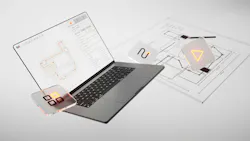
This changes how machines are designed. Instead of focusing primarily on how products can physically move from one process step to the next, engineering teams can focus on how the overall process should perform. Routing, sequencing, buffering and product handling become part of a broader system design discussion rather than individual mechanical challenges.
It also enables a much earlier evaluation of machine concepts. Increasingly, manufacturers expect layouts, process flows and throughput scenarios to be validated virtually before physical hardware is available. This allows teams to identify bottlenecks, collision risks and performance limitations much earlier in the development process, reducing engineering risk and shortening the path to commissioning.
Ultimately, the competitive advantage shifts away from mechanical complexity and toward the ability to combine process expertise, software capabilities and machine design into a scalable and adaptable production concept (Figure 3).

As industrial motion relies increasingly on software layers, tracking algorithms and centralized data, what new skills do standard field maintenance technicians need to troubleshoot these systems?
Hans-Peter Kraft, global product manager—ACOPOS 6D and mechatronic services, B&R: The interesting paradox is that as industrial systems become more sophisticated, maintenance should become simpler, not more complicated.
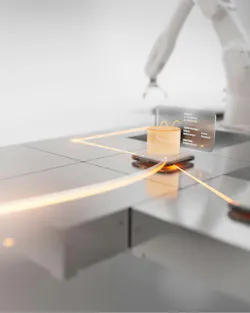
Historically, technicians needed deep knowledge of mechanical systems to diagnose issues. They had to understand wear patterns, mechanical interactions and physical failure modes across numerous machine components. Today, many of those complexities are increasingly addressed through software, diagnostics and system transparency (Figure 4).
As a result, the most important skill is no longer troubleshooting individual components but understanding system behavior. Technicians need to be able to interpret visual diagnostics, recognize performance trends and understand how different parts of a production system influence one another (Figure 5).
That means maintenance is becoming more analytical. Instead of searching for the source of a problem through trial and error, technicians are increasingly supported by digital tools that make machine behavior visible and provide context around potential issues. The ability to interpret that information quickly and make informed decisions becomes critical.
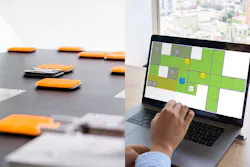
Ultimately, the best systems are those that hide technical complexity from users. Technology should help technicians understand what is happening, why it is happening and what action should be taken next. The easier that information is to access and interpret, the easier it becomes to keep machines running efficiently and reliably.
Get your subscription to Control Design’s daily newsletter.
High-speed intelligent transport and motion systems generate massive amounts of real-time operational data. How should a system integrator architect the edge computing or PLC infrastructure so this traffic doesn't bottleneck the primary machine control loops?
Hans-Peter Kraft, global product manager—ACOPOS 6D and mechatronic services, B&R: The first question should not be how to process the data. The first question should be whether the data creates value.
Many manufacturers collect information because the technology allows it, not because they have a clear use case. Successful data strategies start by understanding which information can improve machine availability, quality, throughput or maintenance (Figure 6).
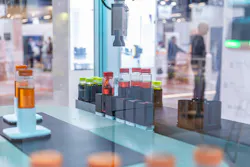
From a technical perspective, real-time control and data analytics should serve different purposes and therefore operate independently. Machine control requires deterministic behavior and predictable response times. Analytics, reporting and optimization can operate on separate layers without influencing critical control functions.
This separation becomes increasingly important as production systems grow more connected. Operational data can provide tremendous benefits, from remote diagnostics and process optimization to predictive maintenance and continuous improvement initiatives. However, these benefits should never come at the expense of machine performance.
The most effective architectures therefore distinguish clearly between execution and analysis. Control systems focus on running the machine, while data systems focus on generating insight. When designed this way, manufacturers gain the ability to continuously improve operations without compromising reliability or performance.
With advanced transport systems making manufacturing processes highly dynamic and recipe-driven, how should the HMI evolve to help operators visualize complex routing, bottlenecks and system errors in real time?
Hans-Peter Kraft, global product manager—ACOPOS 6D and mechatronic services, B&R: As production systems become more flexible and adaptive, the role of the HMI changes fundamentally.
Traditional HMIs were often designed around relatively static machines with predictable movement patterns and fixed process sequences. Modern transport systems operate very differently. Product routes, priorities and process flows can change dynamically depending on production requirements, machine state or product mix (Figure 7).
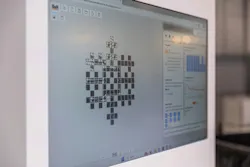
In this environment, operators do not need access to every underlying algorithm or routing decision. What they need is situational awareness. They need to understand where products are moving, where bottlenecks are emerging and where intervention may be required.
This means visualization becomes increasingly important. The HMI should provide clear graphical representations of machine behavior and present relevant information in a way that is immediately understandable. Operators should be able to identify developing issues at a glance instead of having to interpret complex datasets or diagnostic messages.
At the same time, information must be tailored to the user. Operators, maintenance technicians and engineers require different levels of detail. Well-designed interfaces deliver the right information to the right person at the right time without overwhelming them with unnecessary complexity.
As manufacturing systems become more adaptive, user experience becomes a critical part of overall machine performance.
Intelligent, software-configurable motion hardware has a higher upfront component cost than traditional hardware, such as belts, chains and indexing tables. What advice do you have for a machine builder trying to justify that higher bill of materials (BOM) to a procurement-focused customer?
Hans-Peter Kraft, global product manager—ACOPOS 6D and mechatronic services, B&R: The biggest mistake is evaluating advanced transport technologies exclusively through a component-cost lens.
When procurement teams compare a new technology directly against conventional hardware, they often focus on acquisition cost. However, the real financial impact usually emerges at the machine and production-system level.
Advanced transport concepts can influence much more than material cost. They affect machine architecture, engineering effort, commissioning time, maintenance requirements, production flexibility and future adaptability. In many cases, they allow manufacturers to simplify machine designs, reduce mechanical complexity and respond more quickly to changing market demands.
Another important consideration is lifecycle value. Production environments rarely remain static. Product variants, packaging formats and customer requirements continue to evolve. Technologies that allow manufacturers to adapt more quickly can create significant economic advantages over the lifetime of a machine.
For that reason, the discussion should focus on total cost of ownership rather than upfront investment. The important question is not whether one transport technology costs more than another. The important question is how that technology influences productivity, engineering efficiency, uptime, flexibility and future competitiveness.
When viewed from that perspective, the conversation becomes far more strategic and far more relevant to business success.
About the Author
 Mike Bacidore
Mike Bacidore
Editor in Chief
Mike Bacidore is chief editor of Control Design and has been an integral part of the Endeavor Business Media editorial team since 2007. Previously, he was editorial director at Hughes Communications and a portfolio manager of the human resources and labor law areas at Wolters Kluwer. Bacidore holds a BA from the University of Illinois and an MBA from Lake Forest Graduate School of Management. He is an award-winning columnist, earning multiple regional and national awards from the American Society of Business Publication Editors. He may be reached at [email protected]
 Leaders Logo
Leaders relevant to this article: