How to augment maintenance with on-machine sensing
Key Highlights
- Identifying root causes requires investigating both physical environmental factors and personnel limitations, such as labor shortages that prevent consistent manual maintenance.
- Strategic sensor selection should prioritize high-failure assets to maximize return on investment while ensuring the existing infrastructure can support the new data load.
- Effective IIoT implementation involves a collaborative plan between engineering, IT and management to choose the right communication interface for real-time monitoring and predictive maintenance.
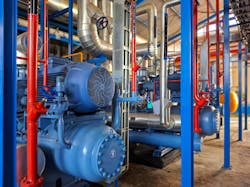
Perhaps you are a newly minted control systems engineer, and your boss has given you a project to find out why a hopper motor keeps having to be replaced every six months as opposed to its normal cycle. Previous data has shown that the hopper motor typically lasted six years. Lately, the maintenance crew has traded it out routinely, every eight months. As a matter of fact, plantwide, there has been an upward tick in the number of motor failures.
When you investigate the environment and talk to the mechanics, you find out that one motor overheated, the other one had to have a bearing replaced, and one motor burnt up due to the basement flooding. Another pump motor failed due to a clogged filter. Upon asking the mechanic about his rounds and preventive maintenance routes, he started laughing and said sarcastically, “There is only one of me.” He smirked and rubbed his forehead with grease as he went to the break room.
A few things should be considered when looking to add sensors to a machine for reliability. A systems engineer may ask:
- “What do I want to accomplish?”
- “Will the money spent provide a solution to a problem?”
- “Do I have the infrastructure to add the sensors?”
When adding monitoring devices to a machine, it’s commonplace to try to alleviate a specific problem while providing a solution to that problem that will save money with the installation of monitoring equipment. This also requires looking ahead to the infrastructure to see how hard it is to support the addition of instruments and possibly networks. These are typical considerations when adding Industrial Internet of Things (IIoT) type of sensors.
Get your subscription to Control Design’s daily newsletter.
What are common types of IIOT sensors? There are several types. Vibration sensors monitor bearing wear and imbalance. Temperature sensors note when motors, gearboxes or pumps overheat. Pressure and flow monitors indicate leaks or blockages. Electrical circuits can be monitored for harmonics, high currents and insulation health. Environmental monitors measure humidity, dust and harmful gases.
The young engineer found that a system could be set up to monitor motor health based on temperature, current and vibration. After talking to the IT department and finding out where the switches for the area are and discussing options with the electrician and the area manager, a plan is derived. The idea would be to get the top condition feedbacks installed, while providing an architecture that would allow additional monitoring devices to be added.
The engineer identifies the motor assets with the largest fail rate. Why? This is where you get the most return on investment. The engineer then chooses a process interface or a notification type interface—decide whether to choose instruments that can feed back 4 -20 mA to the programmable logic controller (PLC) and go on the human-machine interface (HMI) screen and then to a historian predictive maintenance board.
About the Author
 Tobey Strauch
Tobey Strauch
Arconic Davenport
Tobey Strauch is currently managing brownfield installations for controls upgrades at Arconic Davenport. She has previously worked as principal controls engineer and before getting her bachelor’s in electrical engineering, was a telecommunications network technician. She has 20 plus years in automation and controls. She has commissioned systems, programmed PLCs and robots, and SCADAs, as well as managed maintenance crews. She has a broad mix of mechatronics with process control. She enjoys solving problems with Matlab and Simscape. Contact her at [email protected].
 Leaders Logo
Leaders relevant to this article: