Key Highlights
- Operator interfaces have shifted from isolated panels to fully connected Industry 4.0 hubs that integrate with enterprise systems and allow mobile personnel to securely monitor or adjust machinery right from the plant floor.
- Integrating strong cybersecurity measures like network segmentation and multi-factor authentication is now vital to protect these connected interfaces from unauthorized access and costly production disruptions.
- By combining smart design with emerging technologies like artificial intelligence and consumer-style troubleshooting guides, modern interfaces drastically reduce downtime, streamline maintenance and lower the learning curve for operators.
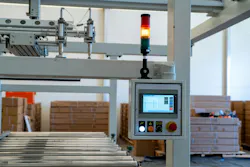
Before you can define the strategic role of human-machine interface, you must first understand what an HMI is. Then you can proceed with defining its operational role and functionality.
Connectivity and Industry 4.0
Operator interfaces are no longer isolated devices. They frequently communicate with:
- PLCs
- SCADA systems
- industrial networks
- manufacturing execution systems
- warehouse management systems
- enterprise resource planning (ERP) software
- cloud platforms.
This connectivity enables remote monitoring, centralized reporting, predictive maintenance and improved production analytics.
Operators and maintenance personnel can often access machine information from tablets, laptops or secure mobile devices without standing directly at the equipment. The proliferation of smart phones and tablets has made its way into industrial automation as effective ways to provide handheld operator interfaces for personnel on the production floor.
A maintenance technician, for example, can use a personal device to make a VPN connection to the operator interface on the machine. This is a huge advantage for technicians in that they can access data about the operation of the machine without being at the main control station. Imagine trying to set the timing on a glue station and being able to make that adjustment on your smart phone while standing right in front of the glue nozzles instead of having to walk back and forth to the HMI to adjust.
Cybersecurity considerations
As industrial systems become more connected, cybersecurity has become an essential component of operator interface design.
Best practices include:
- user authentication
- role-based permissions
- secure communications
- software updates
- network segmentation
- audit logging
- multi-factor authentication where appropriate.
Protecting operator interfaces helps prevent unauthorized access and minimizes the risk of production disruptions.
Get your subscription to Control Design’s daily newsletter.
Benefits of operator interfaces
Organizations that invest in well-designed machine interfaces often realize significant operational improvements, including:
- reduced operator training time
- faster troubleshooting
- lower downtime
- improved product quality
- increased production efficiency
- better process consistency
- enhanced operator safety
- more informed maintenance decisions.
Intuitive interfaces also reduce the likelihood of operator error by providing clear guidance and immediate feedback. Many machine designers have added built-in guides to get a machine back in production that would previously have shown up on office equipment. We all know that familiar step of walking up to the printer and having the interface tell us not only that there is a paper jam, but where it is and step-by-step directions with graphics to guide us to which doors to open and levers to activate to clear the jam and get us back in operation. Bringing this familiarity to an operator interface is a creative way to bridge the gap between human and machine.
Future trends
Several emerging technologies are shaping the next generation of operator interfaces.
Artificial intelligence is beginning to assist operators by identifying abnormal operating conditions before alarms occur. Augmented reality is providing maintenance personnel with interactive repair instructions overlaid on physical equipment. Voice interaction, gesture control and wearable devices are also being explored for specialized industrial applications.
Meanwhile, web-based HMIs are making it easier to deploy interfaces across multiple devices while maintaining consistent functionality and centralized management.
Conclusion
Operator interfaces have become an indispensable component of modern machine control systems. By combining intuitive design, real-time visualization, secure connectivity and powerful data management, HMIs enable operators to manage increasingly sophisticated equipment with greater confidence and efficiency.
As industrial automation continues to advance, the role of the operator interface will expand beyond simple machine control to become a central hub for operational intelligence, predictive maintenance and data-driven decision-making. Organizations that prioritize thoughtful interface design will be better positioned to improve productivity, reduce downtime and create safer, more efficient manufacturing environments.
About the Author
 Rick Rice
Rick Rice
Contributing Editor
Rick Rice is a controls engineer at Trew Automation, a material handling manufacturer based in West Chester, Ohio. With over 38 years’ experience in the field of automation, Rice has designed and programmed everything from automotive assembly, robots, palletizing and depalletizing equipment, conveyors and forming machines for the plastics industry but most of his career has focused on OEM in the packaging machinery industry with a focus on R&D for custom applications.
 Leaders Logo
Leaders relevant to this article: