Transport systems can offer extreme speeds and compact flexibility
Key Highlights
- Software-driven transport systems turn conveyance into an active part of the machine process rather than a static foundation, which simplifies surrounding mechanical designs, slashes floor space requirements and can lower overall project costs despite higher upfront component prices.
- System data and reduced moving parts allow maintenance technicians to pinpoint specific failure points instantly and adapt operations on the fly, eliminating the need to troubleshoot entire machines or rely on physical queuing buffers.
- Transport systems can offer extreme speeds and compact flexibility, while real-time HMI visualization enables operators to optimize dynamic workflows before bottlenecks occur.
John Atchison is sales product manager at Bosch Rexroth. He answered our questions about transport systems.
When a machine builder transitions to independent, software-driven transport systems, how does that change the fundamental design relationship between the mechanical engineer and the controls programmer?

John Atchison, sales product manager, Bosch Rexroth: The relationship between mechanical and controls becomes a critical aspect of the design. No longer is the transport system a piece you set and build the machines around. It has become part of the process and integrates fully into the machine function as well as process.
As industrial motion relies increasingly on software layers, tracking algorithms and centralized data, what new skills do standard field maintenance technicians need to troubleshoot these systems?
John Atchison, sales product manager, Bosch Rexroth: The reduction of moving parts creates a shift in the maintenance levels required. The data allows for performance tracking in the system itself, to the point where troubleshooting becomes more focused on a specific area or item. The technician can analyze the data and work only on the area of need instead of troubleshooting the entire system. This allows for a quicker response to potential failures.
High-speed intelligent transport and motion systems generate massive amounts of real-time operational data. How should a system integrator architect the edge computing or PLC infrastructure so this traffic doesn't bottleneck the primary machine control loops?
John Atchison, sales product manager, Bosch Rexroth: Intelligent transport systems include a level of traffic monitoring to ensure operations are performed in a timely manner. Allowing synchronous motion and independent movement of the carriers gives the integrator more control in alleviating bottlenecks both in the software and simplified designs. No longer are queues required for tasks that take longer, as the part can arrive based on need, not buffering.
With advanced transport systems making manufacturing processes highly dynamic and recipe-driven, how should the HMI evolve to help operators visualize complex routing, bottlenecks and system errors in real time?
John Atchison, sales product manager, Bosch Rexroth: The HMI should become an information central point. The entire process can be shown in real time and visually represents how the components are transported through the system. With added data, the ability to adapt instantaneously allows the operator to improve and adjust process before they ever get behind.
Get your subscription to Control Design’s daily newsletter.
Intelligent, software-configurable motion hardware has a higher upfront component cost than traditional hardware, such as belts, chains and indexing tables. What advice do you have for a machine builder trying to justify that higher bill of materials (BOM) to a procurement-focused customer?
John Atchison, sales product manager, Bosch Rexroth: The focus should be on the total overall cost of the project. While typically the individual component cost is higher, you now have the ability to simplify the equipment around it, and those costs come down. Your machine designs are simpler and cheaper; saving engineering time, material and manufacturing. In some cases, the overall project can be cheaper even though you may have spent more on the transportation. There is also a huge factor in floor space. Using these types of systems can reduce the floor space dramatically when optimized. In some industries, the floor space savings more than outweighs the component costs.
When trying to justify a shift from traditional mechanical conveyance to software-driven transport technologies, what are the overall equipment effectiveness (OEE) metrics or data points you use to convince a skeptic?
John Atchison, sales product manager, Bosch Rexroth: Increased throughput is the typical simple answer to this question. What is missed when only looking at that question is the improvement in other aspects of the equipment. There are fewer moving parts, which reduce the maintenance times. The constant monitoring of performance via software allows for predictive process improvement and on-the-fly adaptions to the sequence of operations. This can all lead to a more efficient production environment.
Tell us about one of your company’s state-of-the-art transport-system product.
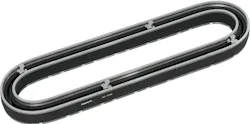
John Atchison, sales product manager, Bosch Rexroth: Rexroth’s ctrlX flowHS linear motion transport system is designed to optimize efficient material flow for the factory of the future. The aim is to ensure short throughput times with industry-leading speed and dynamics. The space-saving, high-speed system is freely configured to match multiple topologies and applications. Some of the key specifications are the top speed of 5 m/s with a 10 G acceleration. The product gap of just 40 mm makes the system very compact. The integrated motors and drives of the segmented modules allow for true flexibility in system placement and controls design.
About the Author
 Mike Bacidore
Mike Bacidore
Editor in Chief
Mike Bacidore is chief editor of Control Design and has been an integral part of the Endeavor Business Media editorial team since 2007. Previously, he was editorial director at Hughes Communications and a portfolio manager of the human resources and labor law areas at Wolters Kluwer. Bacidore holds a BA from the University of Illinois and an MBA from Lake Forest Graduate School of Management. He is an award-winning columnist, earning multiple regional and national awards from the American Society of Business Publication Editors. He may be reached at [email protected]
 Leaders Logo
Leaders relevant to this article: